
Towards Precision Medicine in Sleep Apnea Care: A Conversation with Dr. Ali Azarbarzin, PhD
Lead Investigator, Division of Sleep and Circadian Disorders, Harvard Medical School


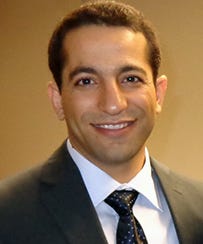
At this year’s ISSS and AAO-HNS meetings, one theme surfaced repeatedly: the sleep surgery and sleep medicine fields are rethinking how we stratify obstructive sleep apnea patients. The long-dominant apnea-hypopnea index (AHI)—a simple count of respiratory events per hour—is giving way to a more nuanced physiologic understanding of OSA and its downstream consequences.
Few voices have shaped this evolution more than Dr. Ali Azarbarzin, whose work at Harvard’s Division of Sleep and Circadian Disorders has helped establish hypoxic burden and other physiologic metrics as key predictors of cardiovascular risk and treatment response. His group’s recent European Heart Journal meta-analysis may mark a turning point—showing compelling evidence that CPAP’s cardiovascular benefits are concentrated among those with high physiologic stress. While we have often opined that OSA represents a spectrum of risk, this adds some of the most compelling data to date supporting that idea, and its clinical implications.
We spoke with Dr. Azarbarzin about the origins of his work, the findings of his important study, and how clinicians can start moving toward a more personalized, physiology-based approach to sleep apnea care.
Background and Origins
What drew you into sleep medicine and the study of sleep apnea?
I was trained in biomedical engineering and respiratory physiology, and my PhD research focused on sleep apnea. Early in my work, I realized that sleep apnea represents a unique “natural experiment”—with nightly cycles of snoring, flow limitation, hypoxia, arousal, and heart rate/blood pressure surges that place measurable stress on the cardiovascular system. That interplay between physiology and clinical relevance drew me to sleep medicine. It felt like an area where precise physiologic quantification could directly translate into better patient outcomes.How did your interest evolve toward quantifying hypoxic burden and moving beyond AHI?
During my postdoctoral training with Dr. Magdy Younes, I began exploring ways to move beyond simple “frequency-counting” metrics. We developed the concept of arousal intensity, recognizing that not all arousals are equal—some brief and subtle, others prolonged and physiologically disruptive.
Building on this, and through discussions with mentors and colleagues at the BWH/Harvard Sleep Lab (Drs. Wellman, White, Redline, and Sands), we recognized similar limitations in AHI. AHI counts events but ignores severity. A short hypopnea with minimal desaturation is not equivalent to a prolonged apnea with profound oxygen drops.
So we developed hypoxic burden—quantifying the total area of oxygen desaturation across all events. This metric captures the depth, duration, and frequency of desaturations, providing a more accurate measure of physiologic stress than AHI. Our goal was to make it robust, scalable, and clinically meaningful—and it’s since been validated across large cohorts in both pediatric and adult populations.
The European Heart Journal Meta-Analysis: Findings and Significance
What prompted your recent meta-analysis, and what did you find?
Prior observational work showed that metrics like hypoxic burden and heart rate response predict cardiovascular risk—but identifying risk factors is not the same as identifying benefits from treatment. We wanted to test whether OSA patients with high physiologic stress during sleep actually benefit from CPAP.
To do this, we pooled individual patient data from the major CPAP outcome trials—SAVE, ISAACC, and RICCADSA—all of which had shown no overall long-term cardiovascular benefit of CPAP. Our hypothesis was that the effect of CPAP depends on the underlying physiologic risk.
Indeed, CPAP significantly reduced major adverse cardiovascular events in those with “High-CVD-Risk OSA”: high hypoxic burden or exaggerated heart rate responses, while showing no benefit—and even a signal of harm—in those with low risk.
These findings shift how we think about treatment efficacy. CPAP does not have uniform effects across all patients - it benefits those with clear physiological risk markers but may be neutral or adverse in others. This is a critical step toward precision medicine in sleep apnea. It’s not that CPAP “doesn’t work,” but rather that it works for the right patients depending on outcome being measured.
That “signal of harm” in low-risk patients surprised many. How do you interpret it?
Several smaller CPAP studies (Gottlieb 2022, Shah 2023, Peker 2024) have hinted that CPAP may, in some cases, increase endothelial inflammation. For example, compared with usual care, CPAP has been shown to increase pro inflammatory, lung distention-responsive angiopoietin-2 levels. In patients without high-risk OSA, the nightly physiological effects of CPAP may counteract expected benefits. Other potential mechanisms for harm include sleep disruption related to nightly CPAP use and the mechanical aspects of the apparatus itself.What does this mean for how we think about large “negative” CPAP trials of the past?
It helps explain why those large CPAP trials appeared neutral. They enrolled a heterogeneous mix of patients—some who benefited and others who did not. When those opposing effects are averaged, the overall result appears null. In our analysis, approximately half of participants were classified as High-CVD-Risk OSA and half as Low-CVD-Risk OSA, which likely diluted the observed treatment effect in the overall trial population.What ‘hypoxic burden’ metrics do you feel have the best evidence to support their use in clinical practice?
Our work has primarily focused on the respiratory event–related hypoxic burden metric, which has been validated in large community-based cohorts including SHHS, MESA, and MrOS (Azarbarzin et al. 2019; Azarbarzin et al. 2020; Labarca et al. 2023). For those interested in further reading, I recommend our recent review discussing various approaches to quantifying OSA and its acute physiological consequences.
Clinical Implications and Next Steps
How should clinicians start incorporating these insights into their practice today?
Even before new tools are available, clinicians can begin looking beyond the AHI. Pay attention to how oxygen drops occur—their depth, duration, and recovery—and to the heart rate response after events. A patient with an AHI of 20 and deep desaturations is very different from one with brief, mild dips.
This mindset—moving from “how many” to “how severe”—is already a major step forward.
Are there efforts to make hypoxic burden tools clinically accessible?
Yes. We are developing algorithms that automatically compute hypoxic burden and ΔHR from polysomnography or home sleep testing signals.What’s next for this line of research?
Future prospective studies are needed to validate these findings, specifically, to test whether CPAP improves outcomes in trials stratified by physiological metrics such as hypoxic burden and heart rate response. In parallel, mechanistic studies are essential to elucidate the pathways linking these physiologic stresses to adverse cardiovascular outcomes.Could this ultimately enable a precision-medicine model for sleep apnea?
This aligns with a precision medicine framework, recognizing that OSA is not a single disease but a spectrum of subtypes. Some patients may require more aggressive intervention, while others might do well with conservative management. The main challenges are: integrating physiologic metrics into clinical workflows, updating practice guidelines, and educating clinicians, however, the field is already moving in that direction.Do you envision a future where combination therapies (behavioral, mechanical, pharmacologic) are matched to patient phenotype and physiology?
I think that’s likely where the field is heading—toward more multimodal, physiology-guided therapy. Some patients may benefit most from CPAP for airway stabilization, others from emerging pharmacologic options such as GLP-1 receptor agonists or AD109, and others from surgical approaches (ie hypoglossal nerve stimulation) or oral appliance therapy. The idea is that matching treatment to patient physiology could improve outcomes, much like the individualized approaches already used in other chronic conditions.
Final Notes:
As Dr. Azarbarzin’s work shows, the field is moving from counting apneas/hypopneas to understanding their impact. For clinicians, researchers, and innovators, this builds on the transition we’ve mentioned before: away from CPAP for all, toward a more nuanced discussion of how to best manage the chronic disease of OSA. The hundreds of millions of patients affected by OSA deserve this level of care.
Best, Chris & Robson.